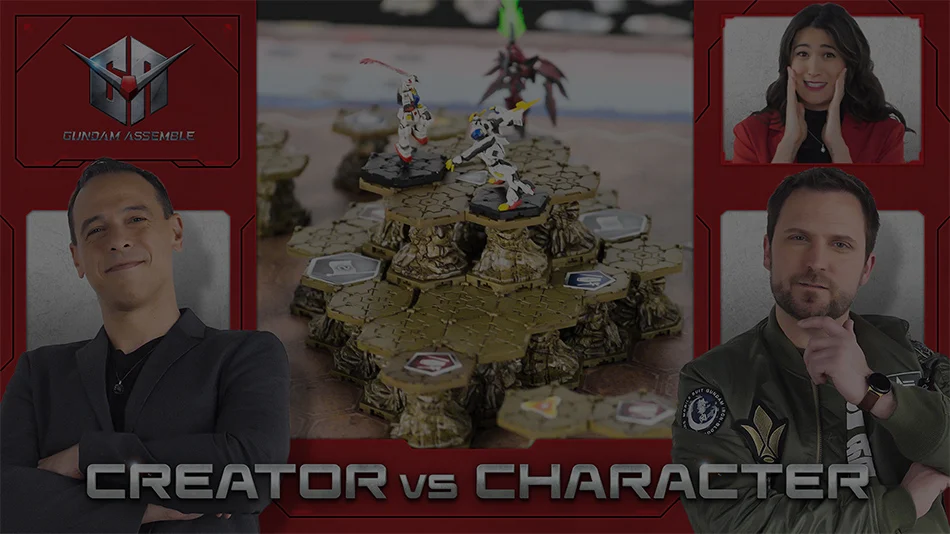
Follow the attack sequence
Complete each timing step before moving to the next. If both players respond at the same time, the attacking player's abilities resolve first. A response card does not grant permission to ignore its printed trigger.
- Declare the weapon and target, confirming range and line of sight.
- Pay the weapon's Timeline cost before resolving the attack.
- Resolve eligible responses that occur before the roll, then roll the attack dice.
- Resolve eligible after-roll responses and critical effects.
- Apply damage and Shields, then resolve the appropriate after-damage responses.
Hits, critical hits and Shields
Accuracy adds to or subtracts from ordinary die results, but does not turn a lower roll into a critical. A natural 9 or 10 remains critical despite Accuracy modifiers. A weapon's critical effect normally triggers once per attack, even with multiple critical dice, unless its text says otherwise.
Each hit normally causes one damage. Resolve other relevant effects before Shields. Critical effects still apply when Shields prevent all of the damage. At zero HP a unit is defeated, awards its VP and returns to Reserve with a two-TL penalty.
| Rule | Normal resolution |
|---|---|
| Strength | Number of ten-sided dice |
| Hit | 4 or higher |
| Unmodified 1 | Always misses |
| Unmodified 9 or 10 | Critical hit |
| Active Shield | Prevents 1 damage from the attack |
Engagement changes your choices
A unit adjacent to an enemy unit or Garrison at the same elevation is Engaged. Movement initiated while Engaged suffers a one-hex penalty. When attacking, an Engaged unit must include at least one of the enemies engaging it among its targets.
Adjacency across different elevations does not by itself cause Engagement. For an area attack, including an engaged enemy can meet the restriction even if other targets are also caught in the area. Do not apply a blanket rule that an Engaged unit can never hit a second target.
Elevation affects movement and Accuracy
Climbing costs one extra movement per elevation level gained. Moving down costs no additional movement. A unit starting a move on elevated terrain can jump using its starting elevation during that movement; ground-level units cannot use that rule to jump.
Attacking a higher target gives -1 Accuracy; attacking a lower target gives +1. Special terrain can introduce other modifiers. Check the current rulebook's line-of-sight diagrams for intervening units and terrain rather than using the miniature's pose as a rule.
Three mistakes to avoid
- Do not stop a single move, attack, then finish the unused part of that same move.
- Do not apply a Speed upgrade to every movement: Speed modifies Advance, not Dash.
- Do not assume every visible target is legal: check range, line of sight, Engagement and card restrictions first.